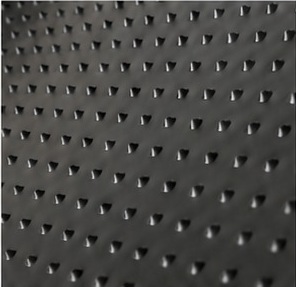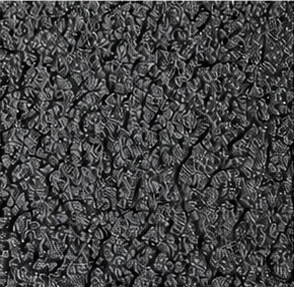
Choose smooth or textured HDPE geomembrane from the interfaces in the designed lining system. Name the material touching each face, the location on the drawing and the relevant loading and moisture conditions. Texture is a surface configuration; its appearance alone does not demonstrate interface resistance or establish that a slope is safe.
Which interface are you actually selecting?
A membrane can contact a protective geotextile, soil or another specified layer. Describe each contact separately. If only one face is textured, identify its orientation on the installation drawing and on the enquiry. “Textured liner for the slope” leaves unanswered which face, which adjoining material and which design condition are being evaluated.
Ask the designer which interface and test basis control the selection. An interface result belongs to the tested pairing and conditions; it is not a universal property of a surface photograph.
What belongs in a like-for-like comparison?
Separate the membrane body specification from the interface question. Compare polymer, offered thickness and tolerances, physical properties and relevant durability requirements, then examine evidence for the actual contact pairing. Identify whether a quoted texture applies to one or both faces and whether the test specimen represents that finish.
A supplier comparison is incomplete if one offer describes a smooth nominal thickness while another describes a textured product using an unexplained measurement basis. Clarify the method and reference document before ranking prices.
How does the decision reach the installation team?
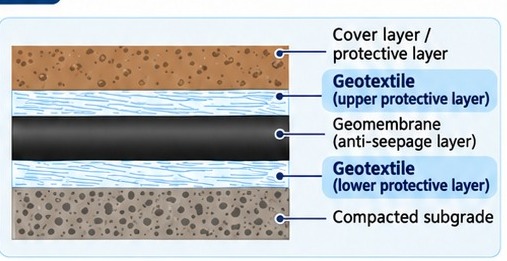
Carry the accepted surface, face orientation and location into panel schedules and receiving checks. Keep interface evidence with the product identification. Protection layers, seams, anchorage and site preparation still belong to the project design; selecting a texture does not replace those responsibilities.
If an adjacent geotextile or cover material changes, identify whether the interface assessment needs review. A product name that stays the same does not mean the surrounding system stayed the same.
Illustrative decision: one project, two contact pairs
A project uses liner beneath a protective fabric in one area and next to a different specified layer elsewhere. The buyer should create two interface entries rather than reuse the first result automatically. The example explains how to organise the enquiry; it does not prescribe a finish, allowable slope or test threshold.
Next step
Send a contact-layer sketch and face-orientation requirement with your HDPE geomembrane enquiry. Use the studded versus spray-textured comparison when identifying the offered finish.
Frequently asked questions (FAQ)
Are all flat areas suitable for smooth liner?
There is no universal approval based only on the word “flat.” Confirm the local design, adjoining materials and operating conditions. This guide provides no slope or loading threshold.
Is double-sided texture always better than one-sided texture?
Not as a general purchasing rule. Ask which interface needs which surface and whether the offered two-sided construction is supported by the project specification. Extra texture is not a substitute for an interface assessment.
Can a texture photograph replace an interface report?
No. A photograph can help identify a finish but cannot supply a measured result for the project contact pair. Ask for the specimen identities, method and conditions associated with the report.
Can a textured liner eliminate protective geotextile?
Do not infer that from the finish. The protective layer has a separate design role. Have the designer confirm the complete layer arrangement and review any proposed omission.
What should an installer receive for a single-sided textured liner?
The accepted product identity, face orientation and drawing location should be clear in the project records. Ask the responsible project contact to resolve any mismatch before the delivery label is interpreted as an installation instruction.
What if the geotextile touching the membrane changes?
Identify the changed contact pair and ask whether the interface evidence remains applicable. Retain the original and proposed material identities. A membrane specification that remains unchanged does not automatically validate a new adjoining material.
Source & applicability
Supplier literature supports this selection brief. Reference ranges do not establish an approved grade, certification or tested system performance.
Technical documents & media
HDPE Geomembranes — English Brochure
Smooth, studded and spray-textured HDPE, dimensions, reference GH tables, protective layers, composite structures, installation and selection FAQ. Illustrative external project images are not BOSHIDA case evidence.
Download technical document (PDF)
View in technical resourcesHDPE Geomembranes — Chinese Brochure
Chinese companion literature covering HDPE finishes, reference data, installation and composite-layer selection. It is a language source, not a separately approved technical specification.
Download technical document (PDF)
View in technical resources