Editorial purchasing guidance based on the cited sources. Product suitability and acceptance criteria require project-specific review; this article is not an engineering approval.
For a pocket-spring ultrasonic trial, give the longitudinal seam and transverse closure separate entries on the result sheet. Record which of these positions was actually tested and leave the other undecided until it has been reviewed. This proposed record helps a mattress manufacturer define the scope of a seam decision; it supplies no welding settings or pass limits.
What does the equipment example actually establish?
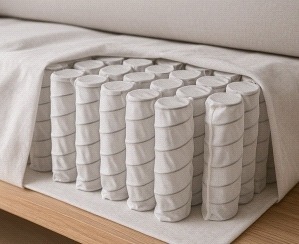
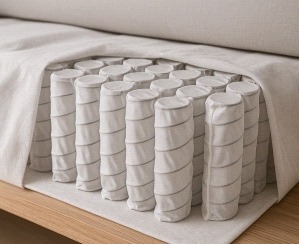
TELSONIC describes an automated application in which polypropylene nonwoven encloses steel mattress springs. The example uses different sonotrode lengths for longitudinal and transverse welds. A sonotrode is the ultrasonic tool that delivers vibration at the joining area. These details belong to that equipment example; they do not establish compatibility for another fabric or production line. [1]
For a trial request, identify which joint is being evaluated. Ask whether the sample will represent the longitudinal seam, the transverse closure or both. A result without that identification leaves the approval scope unclear.
What should the buyer put in the trial brief?
Use the following as proposed fields to agree with the material supplier and machine specialist. They are editorial recommendations, not published acceptance limits.
Identify the candidate fabric and sample lot. Request the declared fibre composition and the specification revision supplied with the sample. Describe the spring dimensions, pocket drawing and intended joining method. Record fabric width in millimetres and mass per area in grams per square metre (g/m²); identify any conversions rather than comparing unlabeled numbers.
Name the machine and tool configuration used for the trial. Ask the responsible operator to record the actual settings and operating conditions. Leave unknown entries marked for confirmation. Copying settings from an unrelated equipment case would not document the conditions used on the buyer’s line.
How should trial results become a purchasing decision?
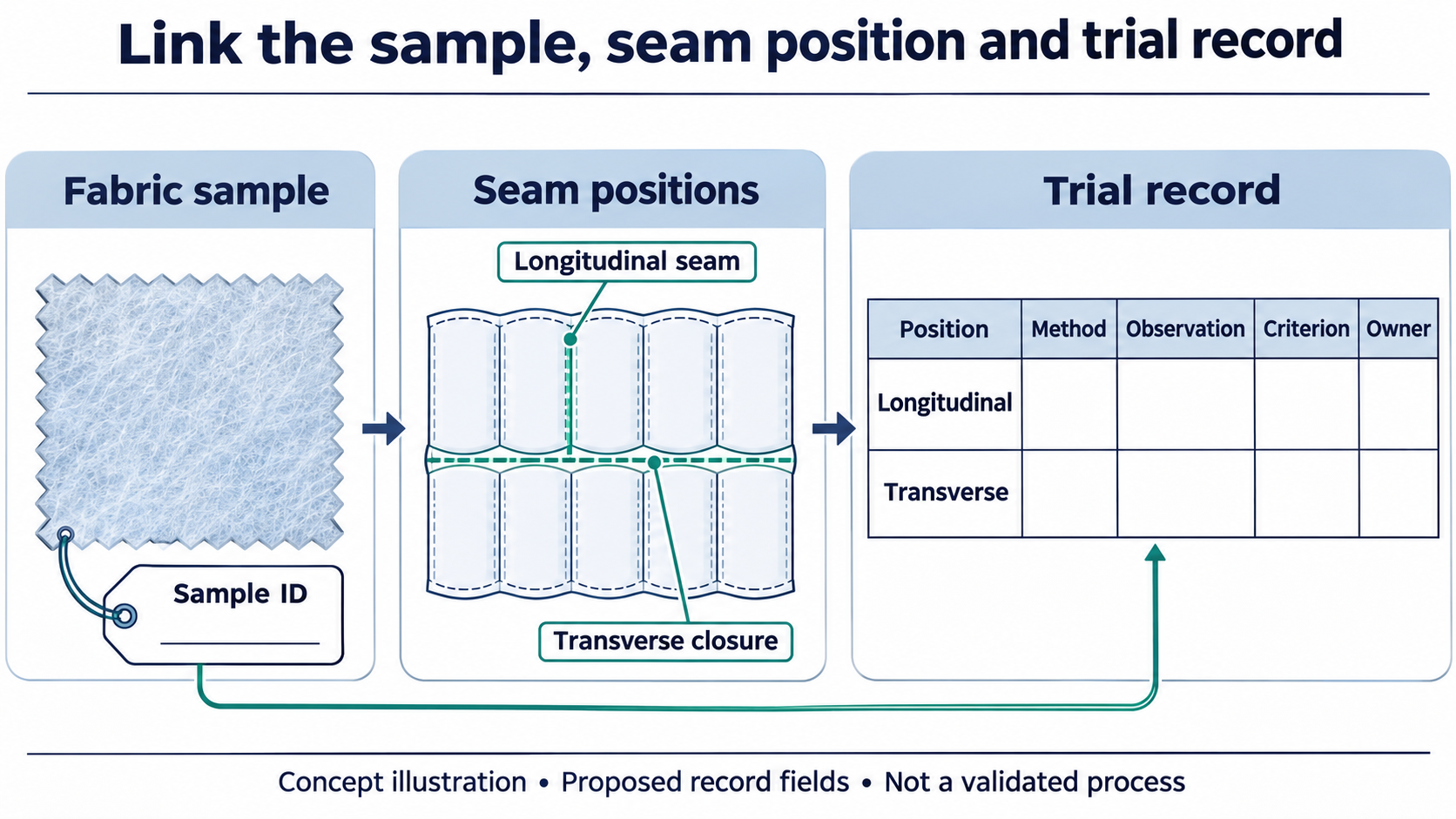
Agree a result sheet before the trial. For each seam position, provide spaces for the sample ID, inspection or test method, observed result, acceptance criterion and decision owner. Have the buyer’s technical team and equipment specialist set the applicable method and limits; this checklist supplies neither.
Record failures as observations before assigning a cause. For example, a seam opening is an observation; attributing it to the fabric requires further investigation of the actual trial. If the fabric, tool or pocket design changes, ask the decision owner which results need to be repeated.
The useful purchasing output is a written scope of approval: which sample and configuration were accepted, which conditions remain unresolved and what must happen before an order is released. Keep that record with the quotation so that a sample decision does not silently become approval for every later configuration.
How can the buyer keep the two seam decisions separate?
Create separate longitudinal-seam and transverse-closure entries in the trial record. Identify the tool or setup used for each, the fabric sample and the part of the pocket examined. Do not write one general “welding passed” conclusion if only one seam position was assessed. This is a proposed record structure; the equipment specialist and buyer must select the actual method and limits.
Include an observation field before the final decision. A trial can record a visible opening, irregular seam or a result from an agreed test, but the record should distinguish that observation from an explanation of its cause. If one position needs a tool or process adjustment, keep the revised trial linked to that position instead of replacing the original result without history.
Illustrative trial comparison: one accepted seam, one unresolved closure
Suppose the longitudinal seam is evaluated under the recorded setup while the transverse closure has not yet been checked. The purchasing record should show exactly that partial state. Ask the decision owner what is still required before production approval. This example contains no tested result or universal acceptance rule; it shows how to prevent a limited trial from being recorded as approval for the entire pocket.
Next step
Prepare one trial brief containing the fabric sample ID, pocket drawing, seam positions and decision owner. Review the Spring Pocket Fabric page for the material enquiry route, and use the OEM Sampling guide to organise sample records.
Frequently asked questions (FAQ)
What if the buyer cannot disclose the full machine setup?
Agree a limited trial record with the buyer and equipment specialist. Record who holds the confidential details and which approval remains pending. Do not label missing information as confirmed compatibility.
Can a fabric tensile result approve an ultrasonic seam?
No. A fabric specimen and a joined seam answer different questions. Identify the actual joint, method and applicable acceptance basis for the seam trial.
Do the equipment example’s power and frequency apply to our line?
Do not adopt another equipment case as a universal setting. The example establishes that a particular arrangement exists; the actual line and offered construction need the appropriate process verification.
What should be repeated after changing fabric or tooling?
Identify the changed variable and ask the responsible technical contact which earlier conclusions remain applicable. Keep the revised sample, setup and affected seam positions traceable instead of carrying over the previous approval automatically.
Should trial samples come from the exact fabric construction being quoted?
The buyer needs to know the relationship between the trial sample and the proposed supply. Record the sample identity, construction and applicable specification; disclose any differences before treating a trial result as support for the bulk offer.
Who records the acceptance decision after the line trial?
Agree the decision owner with the buyer and equipment team before testing. Keep the result, applicable seam positions and unresolved issues with that decision. The supplier’s dispatch of samples is not itself the buyer’s production approval.
Reference: TELSONIC: Ultrasonic joining technology for metal springs for mattresses
Source & applicability
Supplier literature supports this selection brief. Reference ranges do not establish an approved grade, certification or tested system performance.
- Spring Pocket Fabric Literature · Company product-family context only; does not establish machine compatibility or process settings.