
HIGH-TOUGHNESS NEEDLE-PUNCHED LINERS
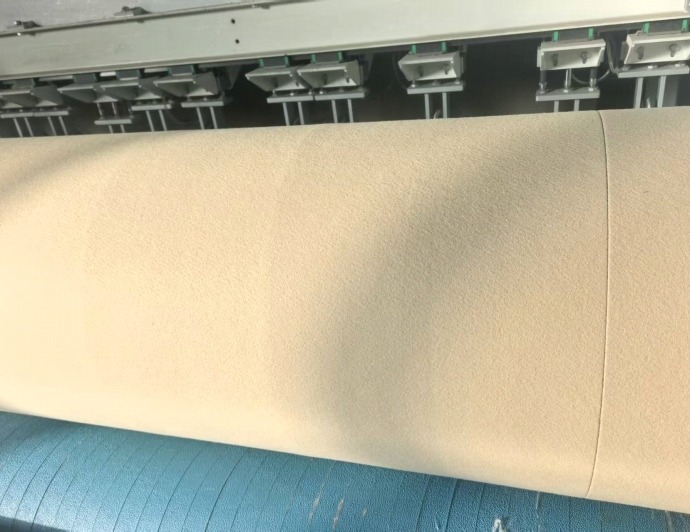
High-Strength Needle-Punched Nonwovens
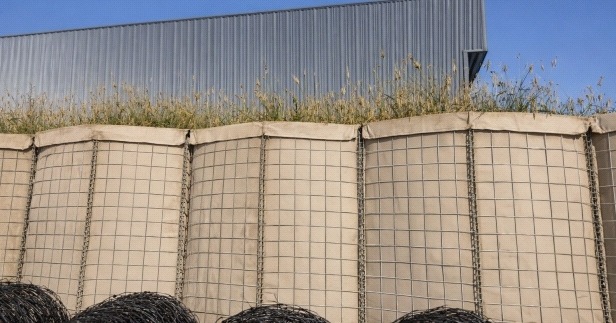
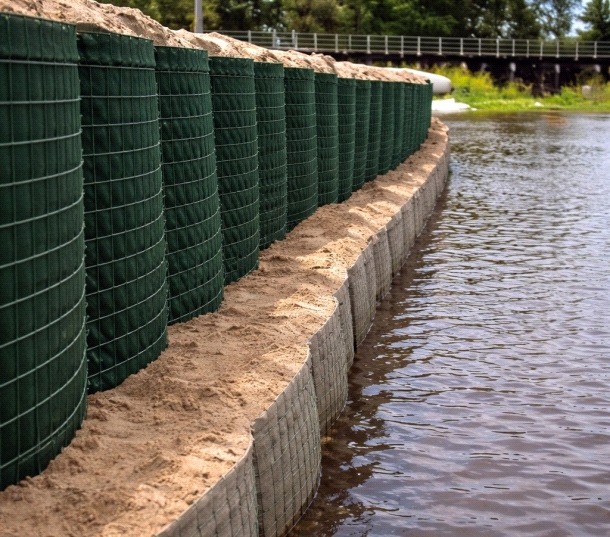
Needle-punched nonwoven rolls are reviewed as a liner component for filled protective and emergency barrier systems. Fill confinement, handling, seams and environmental exposure are separate questions; a fabric range does not establish complete-system performance.
1material families
1family / type records
2application briefs
9source documents
THE PLATFORM AT A GLANCE01 02 03 04
Specify the liner around the fill and the barrier module.
Fill type, particle size, sharpness and placement method
Required properties, directions and specific test conditions
Deployment duration, exposure, quantity and agreed sample
01 / MATERIAL RANGE
Know what belongs in this platform.
01 / MATERIAL FAMILY
High-Toughness Nonwoven Liner Rolls
Select needle-punched liner material for filled protective modules and flood-barrier development. Match the fabric to fill retention, drainage, mesh contact, handling and the expected exposure period.
Review construction, references & conditions ↗02 / SELECTION LOGIC
Choose by the job the material must do.
Retain the specified fill
Define particle grading, sharpness and the retention / drainage balance.
High-Toughness Nonwoven Liner Rolls ↗Handle filling & installation
Assess friction, local puncture, tear propagation, module geometry and filling method.
High-Toughness Nonwoven Liner Rolls ↗Review outdoor exposure
Agree deployment duration, UV test conditions, moisture, temperature and the applicable specification version.
High-Toughness Nonwoven Liner Rolls ↗03 / REFERENCE ATLAS
Compare the right specification inputs.
| Material / type | Reference field | Supplied literature value |
|---|---|---|
| High-Toughness Nonwoven Liner Rolls | Mass | 200–800 g/m² brochure range |
| High-Toughness Nonwoven Liner Rolls | Thickness | 1.5–4.0 mm brochure range |
| High-Toughness Nonwoven Liner Rolls | Width | Up to 7.0 m stated; confirm offered dimensions |
Read the full product table before specifying a grade. Do not combine upper limits across rows, variants or source versions. No approved model code is inferred from these ranges.
04 / APPLICATIONS
Continue in the application context.
05 / DOCUMENTS & EVIDENCE
Build a useful technical package.
Editable selection briefs
Fill the inputs you know. A request worksheet is different from a data sheet or test report.
High-Toughness Nonwoven Liner Rolls brief ↗Released original literature
No original technical file for this platform is currently released for public download. Product pages retain the supplied reference data and source scope.
Browse released technical resources ↗Grade-specific evidence
Request the offered identifier, effective TDS, sample or batch results and permission to share. Certification and complete-system performance require their own evidence.
Request the applicable documents ↗How to review evidence ↗SUPPLIED SOURCE LIBRARY
Where the platform information comes from.
Protective Liner Overview — Final File ↗Protective Liner Overview — Edited File ↗Protective Liner Overview — New Folder Copy ↗Protective Liner Product Brochure ↗Protective Liner Technical Range — Undated File ↗Protective Liner Technical Range — 202608 File ↗Protective Liner Technical Range — Chinese Earlier File ↗Protective Liner Technical Range — Chinese Modified File ↗Supplied Geotextile Sample Test Report ↗
06 / BUYER GUIDANCESearch all buyer questions ↗
Understand the differences before you request a grade.
01 / BUYING GUIDE
Technical resources
Protective Liner Selection: Fill, Abrasion, Drainage and Deployment
Select a nonwoven liner for a filled protective barrier by identifying the module, fill, contact conditions and deployment period. A material-strength headline cannot establish the performance of the assembled barrier. Separate the fabric and fabricated-liner requirements from the system designer’s protection claims, and make the supplied format part of the enquiry.
Explore02 / BUYING GUIDE
Technical resources
A Sample Test Report Is Different from a Brochure Range
A sample test report describes the specimen and tests identified in that report. A brochure describes a product family or claimed capability. Procurement needs both context and traceability: identify what was tested, what is being offered and which project requirements the evidence actually answers. Neither a laboratory logo nor a strong result fills in missing scope.
Explore03 / BUYING GUIDE
Technical resources
Technical File Versions: What Procurement and Quality Teams Should Check
A filename containing “Final,” “edited” or a date does not establish an approved specification revision. Compare the changed content, the product scope and the actual approval information. The purchasing record should identify one applicable version without erasing older files or selecting favourable numbers from incompatible documents.
ExploreQuestions for this material platform
What information is needed for a protective liner material brief?
Describe the system construction, fill material, seams, exposure, target properties, roll dimensions and quantity. This enquiry concerns nonwoven liner material, rather than a complete protective barrier system.
Explore high-toughness liner rolls ↗What should I identify before selecting high-toughness nonwoven liner rolls?
PP or PET needle-punched liner material for filled protective barrier modules. Roll goods, pre-cut pieces or fabricated pieces subject to project confirmation. The offered composition and construction should be recorded against a sample or approved specification, rather than inferred from a generic product name. Fill retention;Drainage;Abrasion;Choose around fill type and particle sharpness, module geometry, mesh contact, exposure and deployment duration. Compare candidates under the same application conditions. Material weight alone does not establish equivalent performance.
Review construction, conditions & sources ↗What evidence should I request for high-toughness nonwoven liner rolls?
Offered grade, tensile/tear/puncture methods, fill-retention/drainage balance and durability conditions; map every result to the sample. Request the applicable method, specimen direction, conditioning and test scope. A published reference range is different from a measured sample result. This is liner material, not a complete barrier, blast or ballistic system rating. Standard, Enhanced and Extended Deployment in the brochure are selection descriptions, not verified commercial model codes. Conflicting mechanical and UV ranges are held for confirmation.
Review construction, conditions & sources ↗Does the liner specification establish a complete protective-barrier rating?
No. It describes the liner material. Complete-system structural, flood, blast or ballistic performance requires separate design and evidence. Confirm the offered liner grade and the applicability of each test result.
Review High-Toughness Nonwoven Liner Rolls ↗07 / YOUR NEXT STEP
Turn the use into a comparable material brief.
Identify the construction and application. Record the dimensions, conditions, required tests, quantity and destination. Confirm the proposed grade, evidence and supply scope before ordering.