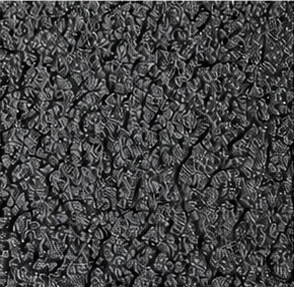
Supplied brochure image. Material / use reference; confirm the offered configuration.
Specification & selection inputs| Construction | A flat HDPE surface without pronounced raised texture |
|---|
| Supply / process | Roll deployment, overlap welding and project-specified seam inspection |
|---|
| Intended uses | Engineered containment areas selected by interface and media conditions |
|---|
| Commercial model | Not established in the supplied literature; confirm the offered grade |
|---|
| Data status | Brochure references; not guaranteed values or batch test results |
|---|
Catalogue references are not guaranteed performance values. Confirm the offered grade, test methods and supply responsibilities in the quotation.
Product type / configuration, not an approved commercial model code. Confirm the offered identifier and specification before ordering.
Supplier literature: specification inputs
These are stated brochure ranges for preliminary review, not a guaranteed combination or an approved commercial model. Confirm the selected construction, tolerances, test method and acceptance criteria.
| Property / configuration | Literature reference |
|---|
| Supply range | Within the family brochure range; confirm finish-specific thickness, width and color |
| Surface orientation | State the adjacent material on each face |
| Verification | No project-specific interface shear or batch report supplied in this library |
Material and construction
A flat HDPE surface without pronounced raised texture.
The material is selected for engineered containment areas selected by interface and media conditions. Define the component or system position first, then use the selection and evidence requirements on this page to prepare a comparable enquiry.
Applications and material position
Engineered containment areas selected by interface and media conditions.
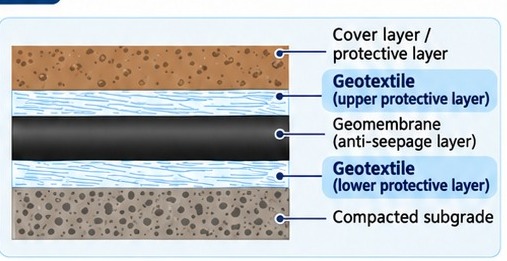
Specify a flat membrane surface where the design calls for it. Identify both faces and the layers that touch them, including any protection textile, drainage material, soil or cover.
What changes the selection
Review representative sheet and seam evidence against the project specification. A smooth appearance does not remove the need to check substrate preparation, slope interfaces, protection and anchorage.
Processing and supply configuration
Roll deployment, overlap welding and project-specified seam inspection.
Agree the supplied format, dimensions, tolerances, identification and packaging around the actual converting or installation sequence. Use a representative sample to confirm the proposed construction before recording it as the accepted material for the order.
Reference dimensions and configuration
The supplied literature provides the following preliminary inputs: Supply range: Within the family brochure range; confirm finish-specific thickness, width and color; Surface orientation: State the adjacent material on each face; Verification: No project-specific interface shear or batch report supplied in this library.
Confirm the offered construction and applicable range before ordering. These entries are not a promise that every listed value can be supplied together.
Performance review and acceptance
Membrane properties, interface shear where required, texturing consistency and weld acceptance. Request the applicable method, specimen direction, conditioning and test scope. A published reference range is different from a measured sample result.
Keep the proposed material identifier, specimen preparation and acceptance basis with the result so that procurement can compare like with like.
Applicability and limitations
Do not apply a universal slope limit, rank studded against spray-textured by appearance, or treat greater roughness as proof of greater resistance. Protective layers and anchorage remain design items.
Sampling and procurement brief
Include the following in your enquiry: contact medium and temperature; exposed or covered use; adjacent layers; thickness and tolerance; panel layout; seam tests; finish-specific availability.
Start with the conditions you know; mark the unknown values for review. Use the related application and product-type links on this page to refine the requirement, then send a material-specific brief. Sample approval, packing, available supply format, quantity and delivery timing are confirmed for the proposed order.
Source & applicability
Supplier literature supports this selection brief. Reference ranges do not establish an approved grade, certification or tested system performance.