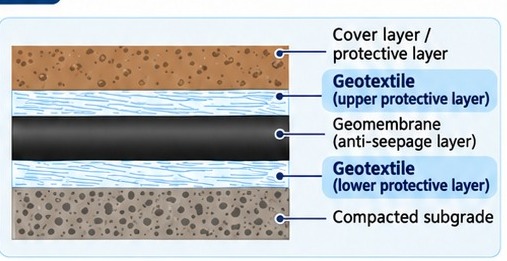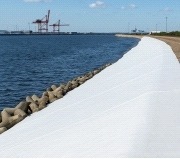
Supplied brochure image. Material / use reference; confirm the offered configuration.
Specification & selection inputs| Construction | High-density polyethylene sheet used as a containment barrier |
|---|
| Supply / process | Smooth, studded or spray-textured roll goods with one- or two-sided surface options |
|---|
| Intended uses | Water storage, irrigation, aquaculture, environmental containment and selected industrial or mining systems |
|---|
| Commercial model | Not established in the supplied literature; confirm the offered grade |
|---|
| Data status | Brochure references; not guaranteed values or batch test results |
|---|
Catalogue references are not guaranteed performance values. Confirm the offered grade, test methods and supply responsibilities in the quotation.
Supplier literature: specification inputs
These are stated brochure ranges for preliminary review, not a guaranteed combination or an approved commercial model. Confirm the selected construction, tolerances, test method and acceptance criteria.
| Property / configuration | Literature reference |
|---|
| Thickness | 0.25–3.0 mm reference; options differ by finish and color |
| Common thicknesses | 0.5 / 0.75 / 1.0 / 1.5 / 2.0 mm |
| Width | 1–8 m; common 6 m |
| Roll length | 50 / 100 m; other lengths subject to confirmation |
| Color | Black / white / blue |
| Surface | Smooth / studded / spray-textured |
GH-2S smooth reference values
Brochure table referring to GB/T 17643-2025; GH-2S is the source category, not a verified BOSHIDA SKU. No third-party batch result is implied.
| Thickness (mm) | Yield ≥ (N/mm) | Break ≥ (N/mm) | Tear ≥ (N) | Puncture ≥ (N) |
|---|
| 0.75 | 11 | 20 | 93 | 240 |
| 1 | 15 | 27 | 125 | 320 |
| 1.25 | 18 | 33 | 160 | 400 |
| 1.5 | 22 | 40 | 190 | 480 |
| 2 | 29 | 53 | 250 | 640 |
| 2.5 | 37 | 67 | 315 | 800 |
| 3 | 44 | 80 | 375 | 960 |
GH-2T1 / GH-2T2 textured reference
Values transcribed as stated; the source does not print ≥ before these individual cells. Confirm the precise acceptance basis and the offered type. Average asperity ≥0.25 mm / minimum ≥0.20 mm is a source reference, not interface shear evidence.
| Thickness (mm) | Yield (N/mm) | Break (N/mm) | Tear (N) | Puncture (N) |
|---|
| 1 | 15 | 15 | 125 | 270 |
| 1.25 | 18 | 20 | 160 | 335 |
| 1.5 | 22 | 24 | 190 | 400 |
| 2 | 29 | 32 | 250 | 535 |
| 2.5 | 37 | 39 | 315 | 670 |
| 3 | 44 | 48 | 375 | 800 |
What is an HDPE geomembrane?
An HDPE geomembrane is a high-density polyethylene sheet used as the liquid-containment layer in a lining system. It has a different role from a permeable geotextile: the membrane provides the barrier layer, while a separately specified geotextile may provide filtration or protection.
This family includes smooth, studded and spray-textured surfaces. Use the individual type pages to compare surface construction before defining the offered grade.
Choose the application before the specification
The supplied literature describes uses in water storage, irrigation, aquaculture, environmental containment and selected mining or industrial systems. Tell us what the liner will contain, where it will be installed and whether it will remain exposed or covered.
For a fish pond or reservoir, describe water conditions, pond geometry, subgrade and access for installation. For environmental or industrial containment, provide the contact medium, concentration, temperature and applicable project requirements. An application name alone does not confirm chemical compatibility or regulatory suitability.
Compare smooth, studded and spray-textured surfaces
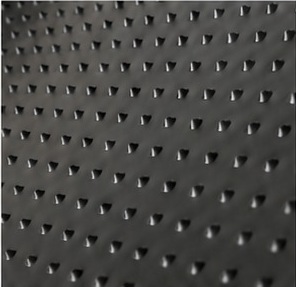
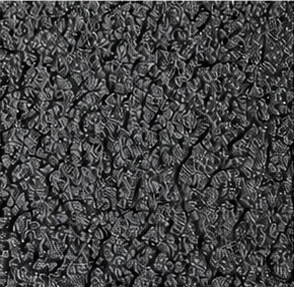
Smooth material has a flat surface without pronounced raised texture. Studded material has regularly distributed raised points. Spray-textured material has an irregular rough finish. Studded and spray-textured options may be specified on one or both sides; confirm which face contacts each adjacent layer.
For slopes or covered lining systems, identify the interfaces and design loads before choosing the finish. Visible roughness does not establish interface shear resistance. Request evidence applicable to the proposed material combination and project conditions.
Thickness, roll sizes and color options
The supplied brochure lists a family thickness range of 0.25–3.0 mm, widths of 1–8 m and standard roll lengths of 50 or 100 m. Common thicknesses are 0.5, 0.75, 1.0, 1.5 and 2.0 mm; listed colors are black, white and blue. These are literature ranges, with availability depending on the selected finish and color.
Compare roll width and length against the layout, seam plan, handling and transport requirements. Confirm the actual thickness, tolerances, dimensions and color in the quotation. Color is an appearance or design input, not proof of quality grade.
Installation and seam requirements
Containment depends on the installed system as well as the supplied sheet. Define subgrade preparation, protection layers, overlaps, welding procedures, penetrations, anchorage and inspection requirements in the project documentation.
Tell us which party will install and test the liner. Confirm material identification and the required seam acceptance records before procurement; the product page is not an installation design or approval of a completed lining system.
Review evidence for the offered material
Use the reference tables on this page as a starting point for discussing thickness, tensile properties, tear and puncture requirements. Confirm the test method, direction, conditioning, acceptance basis and applicability to the proposed grade. The brochure categories GH-2S, GH-2T1 and GH-2T2 are reference classifications, not confirmed BOSHIDA commercial model codes.
Request the applicable technical data sheet and sample or batch documents. Drinking-water suitability, chemical resistance, service life and project-specific interface performance require their own supporting evidence; they are not inferred from a generic HDPE name.
What to include in your material enquiry
Send the application and project location, contact medium and temperature, exposed or covered use, adjacent layers, required surface and side orientation, proposed thickness, roll dimensions, quantity and destination. Include drawings, test requirements and documents needed when available.
If the grade is undecided, describe the problem and the conditions you know. Open the relevant application or selection guide below, then use the material brief or enquiry form to keep the requirements together. Availability, minimum order, packing and delivery timing are confirmed for the specific request.
Verify supply responsibilities and supporting evidence
Before requesting a quotation, confirm who manufactures the proposed HDPE liner and who is responsible for specification review, material identification and quality documentation. BOSHIDA describes needle-punched nonwovens as its core manufacturing focus; engineering materials are supplied through project-specific coordination. A facility image does not establish that every material in the portfolio is made in that facility.
Use the manufacturing and quality-review links below to check the supply scope and the documents needed for the offered grade. Keep brochure ranges separate from sample or batch results, and request any project-specific certification or suitability evidence before relying on it. Then prepare the material brief with the selected surface, proposed thickness, contact medium, adjacent layers, quantity and destination.
Reference: Verify BOSHIDA manufacturing and coordinated supply responsibilities
Reference: Check grade-specific documents, sample identification and acceptance evidence
Source & applicability
Supplier literature supports this selection brief. Reference ranges do not establish an approved grade, certification or tested system performance.