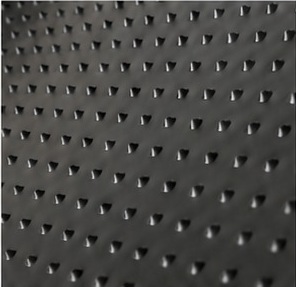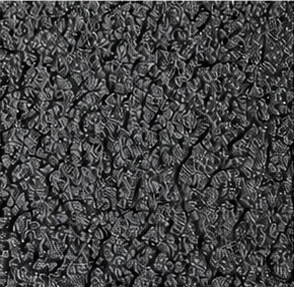
Studded and spray-textured geomembranes have visibly different surface patterns, but a texture name or photograph does not establish which finish is appropriate for a project interface. Compare the offered membrane, the actual contact pair and the supporting test conditions. Treat the surface description as product identification, not an automatic ranking of stability.
What can a surface description establish?
The supplied geomembrane literature distinguishes regularly distributed raised features from an irregular sprayed texture. Those descriptions can help identify which finish is being offered. They do not establish that every product made by either process has the same interface behaviour.
Ask for the finish on each face, the proposed product identification and how thickness or surface characteristics are reported. If the quote uses a trade term that is not explained, request the corresponding specification instead of inferring a manufacturing process.
Which comparison is relevant to the designer?
Name the adjacent layer, design location and conditions used to evaluate the interface. Ask whether the evidence identifies the actual membrane face and contacting material. A result for one geotextile or soil should not silently be transferred to another pairing.
Keep the membrane-body requirements in the comparison as well. Texture does not remove the need to examine the proposed thickness, physical properties and relevant durability evidence. Likewise, a satisfactory body specification does not resolve an untested interface question.
How should a proposed change of finish be handled?
Show the original finish and the complete alternative, including affected faces and interface evidence. Ask the technical decision maker to review the substitution before it becomes a purchase description. Record whether the installation orientation or adjacent material also changes.
Do not use “more roughness” as a universal benefit. The decision is whether the offered finish satisfies the defined interface and membrane requirements, not whether the image appears more aggressive.
Example: what a comparison request should say
Instead of asking “Which texture is best?”, ask “Which offered finish is supported for this membrane-to-fabric interface under the project evaluation conditions?” Include both product identities and the drawing location. This changes the discussion from a surface preference to an evidence request without inventing an allowable slope or strength threshold.
Next step
Use the HDPE geomembrane product family and smooth versus textured selection guide to prepare a face-by-face comparison.
Frequently asked questions (FAQ)
Do higher raised points always mean greater resistance?
No universal relationship is established by a visual feature alone. Ask for relevant interface evidence rather than ranking finishes from photographs or nominal asperity descriptions.
Can two texture types share the same thickness description?
Clarify the measurement basis and applicable product specification. A nominal number without that basis is insufficient for a fair procurement comparison.
Does texture change the need for welding controls?
Texture selection does not establish seam quality. Confirm the offered product’s joining instructions and the project inspection requirements separately.
Can a supplier substitute one textured finish for another?
Only treat it as accepted when the appropriate project decision maker has reviewed the stated alternative and evidence. Preserve the original and revised product identities in the order record.
What should be checked when only one face changes texture?
Record the changed face, its installed orientation and the adjacent material. Ask whether the existing product and interface evidence covers that alternative. A two-sided product name should not conceal a change at one critical contact.
Can two textured-liner prices be compared before the finishes are identified?
They can be recorded as preliminary offers, but not treated as equivalent constructions. Resolve the actual finish, thickness basis and relevant interface requirements before making a like-for-like purchasing decision.
Source & applicability
Supplier literature supports this selection brief. Reference ranges do not establish an approved grade, certification or tested system performance.
Technical documents & media
HDPE Geomembranes — English Brochure
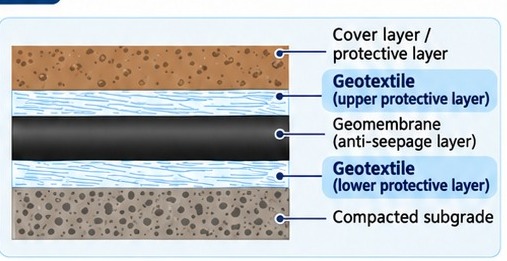
Smooth, studded and spray-textured HDPE, dimensions, reference GH tables, protective layers, composite structures, installation and selection FAQ. Illustrative external project images are not BOSHIDA case evidence.
Download technical document (PDF)
View in technical resourcesHDPE Geomembranes — Chinese Brochure
Chinese companion literature covering HDPE finishes, reference data, installation and composite-layer selection. It is a language source, not a separately approved technical specification.
Download technical document (PDF)
View in technical resources