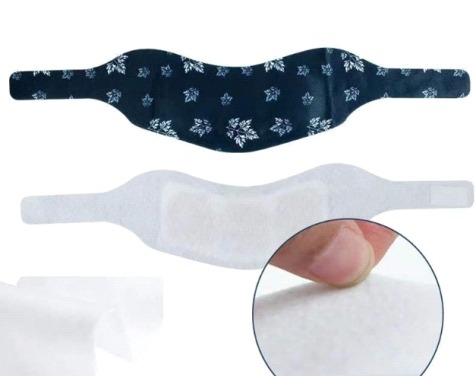
A healthcare or care-product substrate must be defined by its role and intended contact before material properties or safety claims are discussed. A patch carrier, heated care-product layer or another substrate can have different processing and contact requirements. A brochure’s “medical” or “skin-friendly” wording does not establish a finished-product approval.
Which intended-use information belongs in the brief?
Identify the finished product, the layer’s role, the contact type and duration, and relevant heat, moisture, adhesive or lamination conditions. State whether the supplier is being asked for a base material, a converted component or something represented as finished. These boundaries affect the evidence the responsible product team needs.
The supplied care-material literature gives application and property references. Corresponding safety or regulatory approvals for every construction were not established in the material set, so the article makes no medical-grade, sterile or clinical-benefit claim.
How should the evidence request be organised?
Have the finished-product specialist identify the applicable safety, cleanliness, residue, contact and performance questions. Request the actual material identity, method, specimen preparation, conditions and report scope needed for those questions. Do not choose a test solely because a familiar logo appears on another brochure.
If an adhesive, finish or heating step is part of the product, identify whether the evidence applies before or after that processing. A result on the raw substrate should not be silently presented as a result for the finished product.
What can a sample trial establish?
A processing trial can examine defined converting behaviour, such as handling or lamination, under recorded conditions. It is not a substitute for the safety and regulatory assessment of the intended finished product. Keep development observations and approval evidence in separate parts of the file.
Avoid claims of treatment benefit or patient safety from a generic nonwoven description. The manufacturer of the finished product and relevant specialists must determine the applicable requirements.
Example: keep processing success separate from contact approval
A substrate runs successfully through a customer’s coating process. Record the material and process result, then identify the contact-use questions still required for the finished care product. Successful coating does not establish irritation safety, sterility or approval for clinical use.
Next step
Use contact to define the substrate and converting task. Keep development records under the OEM sampling guide and obtain the finished-product specialist’s evidence requirements before making contact-use claims.
Frequently asked questions (FAQ)
Does a medical application page prove medical-device approval?
No. An application description is not an approval document for the supplied material or finished device. Obtain the evidence required for the actual intended use.
Can skin-friendly wording replace a contact safety assessment?
No. Identify the contact, duration, construction and applicable specialist requirements. Do not use the phrase as an assurance unsupported by the required evidence.
Does clean production mean a sterile product?
No such equivalence is established. Sterility and production cleanliness are different claims and need their own defined scope and evidence.
Can raw-substrate results be reused after adding adhesive?
Only after the responsible product team confirms applicability. Identify the finished combination and processing changes instead of assuming the earlier result covers them.
What should a supplier state when only a development substrate is offered?
Identify the material and intended development role without describing it as an approved finished healthcare product. Keep processing support, available evidence and unresolved contact-use requirements explicit in the offer.
Can an optional treatment be added without reviewing the evidence scope?
Do not assume the previous evidence covers the changed construction. Identify the treatment and final use, then ask the responsible product team which processing, safety or performance questions need reassessment.
Source & applicability
Supplier literature supports this selection brief. Reference ranges do not establish an approved grade, certification or tested system performance.