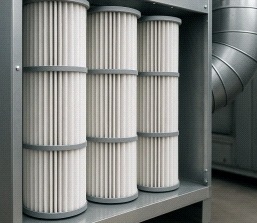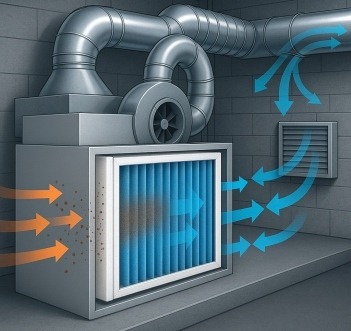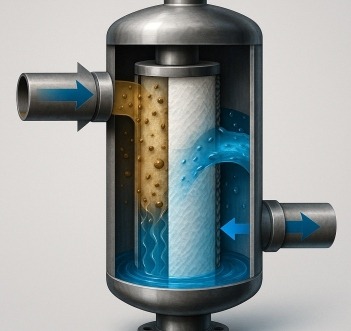
Air and liquid filtration enquiries need different operating descriptions and performance evidence. Air permeability, particle-removal efficiency and a liquid retention claim are not interchangeable quantities. Begin with the medium and duty, then identify the test object, flow conditions and acceptance question for the material or finished filter being purchased.
What belongs in an air-filtration brief?
Describe the intended equipment or component and whether the purchase is for roll media, a support layer or a complete element. Identify the particle challenge, relevant flow or face velocity, pressure-drop requirement and loading question supplied by the buyer. Keep those conditions with the reported result.
A material’s air-permeability value can help characterise it, but it is not automatically the efficiency of a finished filter. Ask how the actual test and specimen relate to the intended application.
What changes when the filtered medium is a liquid?
State the liquid composition, temperature, viscosity where relevant, flow and pressure conditions, and the separation or retention task. Identify compatibility concerns for the actual liquid rather than assuming all water-treatment or industrial liquids are equivalent.
Ask for the method and operating basis behind a retention or micron description. Do not convert an air-permeability number into a liquid rating. A prefiltering substrate and a complete liquid-filter element also have different supply and evidence boundaries.
How should suppliers’ claims be compared?
Use a schedule that identifies the offered material, the duty, test method, specimen or element, operating conditions and result. Where a classification is quoted, confirm the applicable framework and version for the customer’s market and use. Legacy brochure labels should not be converted into current classes by assumption.
Keep special treatments, cleaning conditions and any contact-use requirements separate. A broad filtration category does not establish HEPA, food-contact, drinking-water or high-temperature suitability for an unidentified product.
Example: do not compare unlike pressure-drop figures
One supplier describes a finished filter element at a stated flow; another supplies a roll-media figure at a stated face velocity. Those entries should not be put into one ranking without resolving the different test objects and conditions. Ask for a like-for-like comparison relevant to the actual purchase.
Next step
Use the industrial filtration material enquiry with an operating brief. For multilayer air filters, read the support versus filtration layer guide.
Frequently asked questions (FAQ)
Does a lower pressure drop always mean the best filter?
Not on its own. Keep the required removal performance, conditions, loading and product structure in the decision. A pressure-drop figure answers only part of the question.
Can air-filter fabric be assumed suitable for liquid filtration?
No. Establish liquid compatibility and the required performance under the actual liquid conditions. Similar fibre names do not establish equivalent end-use suitability.
Does a micron label fully describe a liquid filter?
Request the test basis and conditions behind the label. Without that context, the term cannot establish a comparable retention result or suitability for the project.
Can one filtration brochure prove every advertised grade?
No. Request the offered product identity and applicable evidence. A family catalogue cannot replace an identified material or element report.
What should be included when requesting a filter-media replacement?
Identify the existing material or element where known, equipment duty, medium, operating conditions and the performance question being addressed. State whether the supplier is replacing roll material or a complete element; those are different deliverables.
Can a cleaning or reuse claim be transferred between filter applications?
Not without confirming the medium, material, cleaning conditions and required retained performance. A result from one operating or cleaning regime does not establish suitability for a different air or liquid application.
Source & applicability
Supplier literature supports this selection brief. Reference ranges do not establish an approved grade, certification or tested system performance.