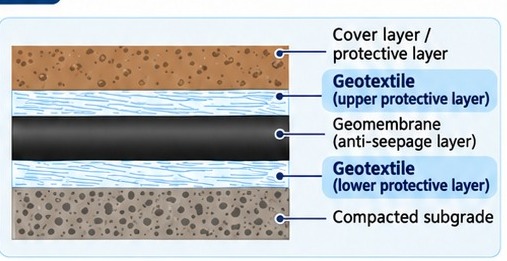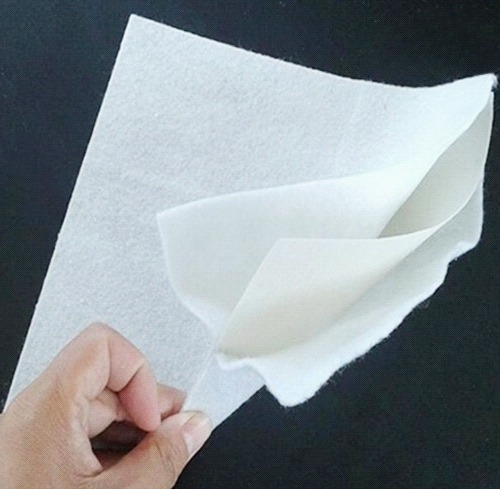
Supplied brochure image. Material / use reference; confirm the offered configuration.
Specification & selection inputs| Construction | One nonwoven fabric on each side of a central membrane |
|---|
| Supply / process | Composite roll supply with project-confirmed joining and edge details |
|---|
| Intended uses | Projects requiring the defined one- or two-sided protection configuration |
|---|
| Commercial model | Not established in the supplied literature; confirm the offered grade |
|---|
| Data status | Brochure references; not guaranteed values or batch test results |
|---|
Catalogue references are not guaranteed performance values. Confirm the offered grade, test methods and supply responsibilities in the quotation.
Product type / configuration, not an approved commercial model code. Confirm the offered identifier and specification before ordering.
Supplier literature: specification inputs
These are stated brochure ranges for preliminary review, not a guaranteed combination or an approved commercial model. Confirm the selected construction, tolerances, test method and acceptance criteria.
| Property / configuration | Literature reference |
|---|
| Layer arrangement | 2 geotextiles + 1 geomembrane (2T1M) |
| Membrane thickness | 0.2–1.5 mm catalog reference; confirm the selected structure |
| Fabric mass | 100–600 g/m² per layer, catalog reference; specify each fabric face separately |
| Width / roll length | 4.0–6.0 m / 50–150 m catalog reference |
Material and construction
One nonwoven fabric on each side of a central membrane.
The material is selected for projects requiring the defined one- or two-sided protection configuration. Define the component or system position first, then use the selection and evidence requirements on this page to prepare a comparable enquiry.
Applications and material position
Projects requiring the defined one- or two-sided protection configuration.
Assign the duty of the upper and lower textiles. They may have different protection requirements, weights or adjacent materials even within the same composite roll.
What changes the selection
Check a representative layer sample and the installation section. A second textile does not remove the need for prepared subgrade, controlled cover placement, interface review and seam inspection.
Processing and supply configuration
Composite roll supply with project-confirmed joining and edge details.
Agree the supplied format, dimensions, tolerances, identification and packaging around the actual converting or installation sequence. Use a representative sample to confirm the proposed construction before recording it as the accepted material for the order.
Reference dimensions and configuration
The supplied literature provides the following preliminary inputs: Layer arrangement: 2 geotextiles + 1 geomembrane (2T1M); Membrane thickness: 0.2–1.5 mm catalog reference; confirm the selected structure; Fabric mass: 100–600 g/m² per layer, catalog reference; specify each fabric face separately; Width / roll length: 4.0–6.0 m / 50–150 m catalog reference.
Confirm the offered construction and applicable range before ordering. These entries are not a promise that every listed value can be supplied together.
Performance review and acceptance
Individual layers, bond continuity and specified composite mechanical/barrier properties. Request the applicable method, specimen direction, conditioning and test scope. A published reference range is different from a measured sample result.
Keep the proposed material identifier, specimen preparation and acceptance basis with the result so that procurement can compare like with like.
Applicability and limitations
A second fabric layer does not remove the need for subgrade preparation, controlled cover placement, slope interface checks or joint inspection.
Sampling and procurement brief
Include the following in your enquiry: membrane thickness and polymer; upper textile construction and mass; lower textile construction and mass; orientation; joint detail; roll layout.
Start with the conditions you know; mark the unknown values for review. Use the related application and product-type links on this page to refine the requirement, then send a material-specific brief. Sample approval, packing, available supply format, quantity and delivery timing are confirmed for the proposed order.
Source & applicability
Supplier literature supports this selection brief. Reference ranges do not establish an approved grade, certification or tested system performance.