Footwear Support Substrates
Compare thermo-set and impregnated nonwoven support routes for shoe components. Select around stiffness, bending, moisture exposure and the planned bonding or forming process.
Choose within Footwear Support Substrates.
Compare construction and intended position first, then open the individual type for its reference parameters, sources, limitations and procurement questions. Product types are not approved commercial model codes.

Thermo-Set Shoe Midsole Fabric
Review thermo-set needle-punched fabric for flexible shoe-support components. Compare heat processing, thickness, bending and bonding behavior in the intended footwear construction.
Explore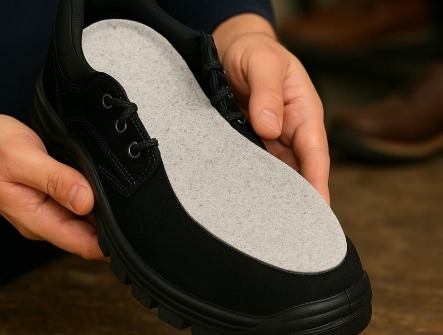
Impregnated Midsole Board
Compare impregnated nonwoven board for shoe-support applications requiring a defined stiffness and shape. Review thickness, moisture conditioning, bonding and bending requirements together.
Explore| Product type | Construction | Intended use | What changes the selection | Next step |
|---|---|---|---|---|
| Thermo-Set Shoe Midsole Fabric | Heat-set polyester needle-punched support fabric | Shoe support components selected for required stiffness and bending | Trial the actual fabric in the intended component and review dimensional stability, bending and bond behavior. Fold-life statements need the test method and specimen geometry before they become an acceptance requirement. | Prepare this type’s brief ↗ |
| Impregnated Midsole Board | Needle-punched base impregnated with a water-based adhesive system | Shoe support components selected for required stiffness and bending | Evaluate cutting, lamination, shaping and bending in the intended component. Specify moisture conditioning and the acceptance method rather than treating a brochure fold count as a universal result. | Prepare this type’s brief ↗ |
Comparison content is derived from the linked product records. No combined maximum specification or automatic interchangeability is implied.
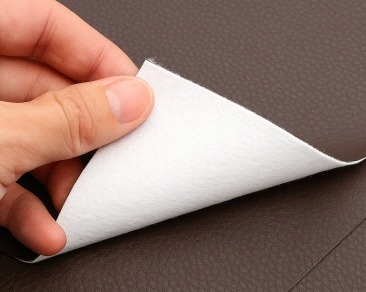
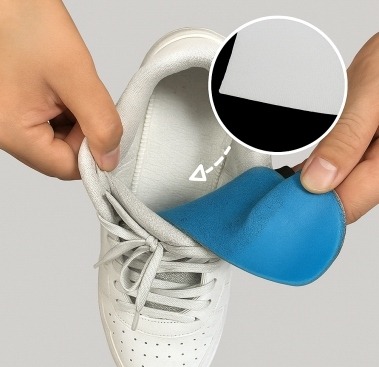
Supplied brochure image. Material / use reference; confirm the offered configuration.
| Construction | Needle-punched shoe support materials with thermo-set or impregnation-reinforced construction |
|---|---|
| Supply / process | Heat setting or water-based adhesive impregnation followed by drying and setting |
| Intended uses | Shoe midsoles, lasting areas, insoles and toe/heel support components |
| Commercial model | Not established in the supplied literature; confirm the offered grade |
| Data status | Brochure references; not guaranteed values or batch test results |
Catalogue references are not guaranteed performance values. Confirm the offered grade, test methods and supply responsibilities in the quotation.
Product type / configuration, not an approved commercial model code. Confirm the offered identifier and specification before ordering.
Supplier literature: specification inputs
These are stated brochure ranges for preliminary review, not a guaranteed combination or an approved commercial model. Confirm the selected construction, tolerances, test method and acceptance criteria.
| Property / configuration | Literature reference |
|---|---|
| Thermo-set range | 100–600 g/m²; 0.8–3.0 mm |
| Impregnated range | 300–900 g/m²; 1.0–3.0 mm |
| Selection | Required stiffness, flexibility, moisture exposure and shoe component |
Material and construction
Needle-punched shoe support materials with thermo-set or impregnation-reinforced construction.
The material is selected for shoe midsoles, lasting areas, insoles and toe/heel support components. Define the component or system position first, then use the selection and evidence requirements on this page to prepare a comparable enquiry.
Applications and material position
Shoe midsoles, lasting areas, insoles and toe/heel support components.
Identify the insole, midsole, lasting or shaping component in the shoe construction. Required rigidity and flexibility vary across these positions and should be stated in the sample brief.
What changes the selection
Evaluate the two construction routes in the same shoe component. Compare cutting, lamination, bending and moisture conditioning with a defined acceptance method before treating alternative boards as equivalent.
Processing and supply configuration
Heat setting or water-based adhesive impregnation followed by drying and setting.
Agree the supplied format, dimensions, tolerances, identification and packaging around the actual converting or installation sequence. Use a representative sample to confirm the proposed construction before recording it as the accepted material for the order.
Reference dimensions and configuration
The supplied literature provides the following preliminary inputs: Thermo-set range: 100–600 g/m²; 0.8–3.0 mm; Impregnated range: 300–900 g/m²; 1.0–3.0 mm; Selection: Required stiffness, flexibility, moisture exposure and shoe component.
Confirm the offered construction and applicable range before ordering. These entries are not a promise that every listed value can be supplied together.
Performance review and acceptance
Stiffness, bending/fold, dimensional stability, adhesive compatibility and requested chemical tests. Request the applicable method, specimen direction, conditioning and test scope. A published reference range is different from a measured sample result.
Keep the proposed material identifier, specimen preparation and acceptance basis with the result so that procurement can compare like with like.
Applicability and limitations
Brochure fold-cycle and environmental compliance claims have no supporting report in the supplied folder. A substrate is not a certified safety shoe component by name alone.
Sampling and procurement brief
Include the following in your enquiry: shoe component; stiffness and bending targets; moisture conditions; bonding or pressing route; thickness; die-cut shape; trial and acceptance requirements.
Start with the conditions you know; mark the unknown values for review. Use the related application and product-type links on this page to refine the requirement, then send a material-specific brief. Sample approval, packing, available supply format, quantity and delivery timing are confirmed for the proposed order.
Source & applicability
Supplier literature supports this selection brief. Reference ranges do not establish an approved grade, certification or tested system performance.
Commercial grade & specification
This page describes a material family or construction type. The offered commercial model and applicable specification are confirmed for the proposed order.
Prepare the grade requirements ↗Technical documents
Review the selection checklist or request documents for the proposed grade. Public checklists are not test reports.
View selection checklist ↗ Find related documents ↗Explore related applications
Before you buy
OEM Sampling: From a Traceable Brief to an Approved Specification
An OEM nonwoven sample is useful when it represents a defined component and a decision the buyer needs to make. OEM means original equipment manufacturer. Start a development request with the finished use and converting process, then identify the candidate sample and the evidence required to move it forward. Sending an unlabelled swatch without that context rarely creates a comparable approval record.
ExploreThermo-Set or Impregnated Shoe Support: Define the Component
Choose thermo-set support fabric or impregnated board by the actual footwear component and required balance of support, flexibility and processing. The supplied footwear literature presents two material routes; it does not establish that their brochure cycle figures are directly comparable or that either route automatically meets a safety-footwear requirement.
Explore