
High-Toughness Nonwoven Liner Rolls
Select needle-punched liner material for filled protective modules and flood-barrier development. Match the fabric to fill retention, drainage, mesh contact, handling and the expected exposure period.
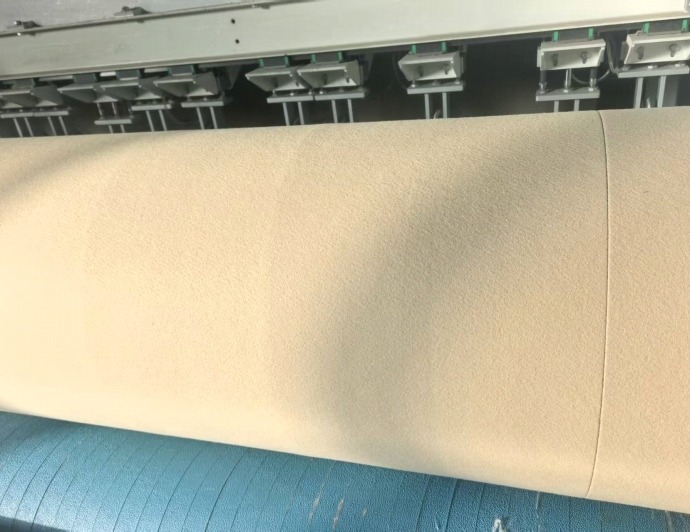
Supplied brochure image. Material / use reference; confirm the offered configuration.
| Construction | PP or PET needle-punched liner material for filled protective barrier modules |
|---|---|
| Supply / process | Roll goods, pre-cut pieces or fabricated pieces subject to project confirmation |
| Intended uses | Fill retention and drainage in protective wall modules, flood barriers and perimeter systems |
| Commercial model | Not established in the supplied literature; confirm the offered grade |
| Data status | Brochure references; not guaranteed values or batch test results |
Catalogue references are not guaranteed performance values. Confirm the offered grade, test methods and supply responsibilities in the quotation.
Supplier literature: specification inputs
These are stated brochure ranges for preliminary review, not a guaranteed combination or an approved commercial model. Confirm the selected construction, tolerances, test method and acceptance criteria.
| Property / configuration | Literature reference |
|---|---|
| Mass | 200–800 g/m² brochure range |
| Thickness | 1.5–4.0 mm brochure range |
| Width | Up to 7.0 m stated; confirm offered dimensions |
| Color | Sand / dark green / grey / custom |
| Tensile range | Different versions state 6–27, 6–72 or 4–50 kN/m; approved grade required |
| UV | Brochures refer to 500 h; the supplied sample report uses 84 h. These are not equivalent evidence. |
| CBR | 1.0–4.5 kN brochure reference; no matching CBR sample result in supplied report |
Material and construction
PP or PET needle-punched liner material for filled protective barrier modules.
The material is selected for fill retention and drainage in protective wall modules, flood barriers and perimeter systems. Define the component or system position first, then use the selection and evidence requirements on this page to prepare a comparable enquiry.
Applications and material position
Fill retention and drainage in protective wall modules, flood barriers and perimeter systems.
Define the liner's role inside the module, rather than specifying the complete barrier through the fabric name. State the fill, module geometry and where the material contacts mesh or other potentially abrasive surfaces.
What changes the selection
Evaluate a proposed liner with representative fill and module contact. Link tensile, tear, puncture and weathering evidence to an identified sample. Different brochure versions contain conflicting ranges; use a confirmed offered specification instead of combining their highest figures.
Processing and supply configuration
Roll goods, pre-cut pieces or fabricated pieces subject to project confirmation.
Agree the supplied format, dimensions, tolerances, identification and packaging around the actual converting or installation sequence. Use a representative sample to confirm the proposed construction before recording it as the accepted material for the order.
Reference dimensions and configuration
The supplied literature provides the following preliminary inputs: Mass: 200–800 g/m² brochure range; Thickness: 1.5–4.0 mm brochure range; Width: Up to 7.0 m stated; confirm offered dimensions; Color: Sand / dark green / grey / custom; Tensile range: Different versions state 6–27, 6–72 or 4–50 kN/m; approved grade required; UV: Brochures refer to 500 h; the supplied sample report uses 84 h. These are not equivalent evidence.; CBR: 1.0–4.5 kN brochure reference; no matching CBR sample result in supplied report.
Confirm the offered construction and applicable range before ordering. These entries are not a promise that every listed value can be supplied together.
Performance review and acceptance
Offered grade, tensile/tear/puncture methods, fill-retention/drainage balance and durability conditions; map every result to the sample. Request the applicable method, specimen direction, conditioning and test scope. A published reference range is different from a measured sample result.
Keep the proposed material identifier, specimen preparation and acceptance basis with the result so that procurement can compare like with like.
Applicability and limitations
This is liner material, not a complete barrier, blast or ballistic system rating. Standard, Enhanced and Extended Deployment in the brochure are selection descriptions, not verified commercial model codes. Conflicting mechanical and UV ranges are held for confirmation.
Sampling and procurement brief
Include the following in your enquiry: fill type and particle grading; module drawing; mesh contact; exposure and deployment duration; roll or cut-piece format; seams; required tests.
Start with the conditions you know; mark the unknown values for review. Use the related application and product-type links on this page to refine the requirement, then send a material-specific brief. Sample approval, packing, available supply format, quantity and delivery timing are confirmed for the proposed order.
Source & applicability
Supplier literature supports this selection brief. Reference ranges do not establish an approved grade, certification or tested system performance.
- Protective Liner Overview — Final File
- Protective Liner Overview — Edited File
- Protective Liner Overview — New Folder Copy
- Protective Liner Product Brochure
- Protective Liner Technical Range — Undated File
- Protective Liner Technical Range — 202608 File
- Protective Liner Technical Range — Chinese Earlier File
- Protective Liner Technical Range — Chinese Modified File
- Supplied Geotextile Sample Test Report
Commercial grade & specification
This page describes a material family or construction type. The offered commercial model and applicable specification are confirmed for the proposed order.
Prepare the grade requirements ↗Technical documents
Review the selection checklist or request documents for the proposed grade. Public checklists are not test reports.
View selection checklist ↗ Find related documents ↗Explore related applications
Before you buy
Protective Liner Selection: Fill, Abrasion, Drainage and Deployment
Select a nonwoven liner for a filled protective barrier by identifying the module, fill, contact conditions and deployment period. A material-strength headline cannot establish the performance of the assembled barrier. Separate the fabric and fabricated-liner requirements from the system designer’s protection claims, and make the supplied format part of the enquiry.
ExploreA Sample Test Report Is Different from a Brochure Range
A sample test report describes the specimen and tests identified in that report. A brochure describes a product family or claimed capability. Procurement needs both context and traceability: identify what was tested, what is being offered and which project requirements the evidence actually answers. Neither a laboratory logo nor a strong result fills in missing scope.
ExploreTechnical File Versions: What Procurement and Quality Teams Should Check
A filename containing “Final,” “edited” or a date does not establish an approved specification revision. Compare the changed content, the product scope and the actual approval information. The purchasing record should identify one applicable version without erasing older files or selecting favourable numbers from incompatible documents.
Explore