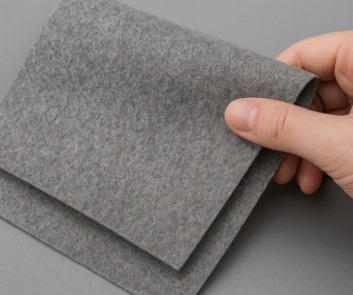
A reusable-bag material enquiry should separate fabric properties, finished-bag construction and environmental claims. A strong roll fabric does not by itself establish handle or seam performance, and the word “reusable” does not prove recyclability or biodegradation. Define the contents and use cycle before comparing a bag or fabric offer.
Which finished-bag details affect the material choice?
Provide the bag dimensions, intended contents, closure and handle arrangement, printing or finishing process and expected handling conditions. Identify whether the supplier is quoting fabric rolls, cut panels or complete bags. Those offers contain different fabrication responsibilities.
The supplied packaging literature lists PET/PP-based needle-punched constructions and sustainability language. It does not establish that every construction meets every repeated-use or end-of-life claim.
What should the trial or acceptance review cover?
Keep fabric tensile and other material properties separate from finished-bag load, seam and handle questions. Ask the customer’s responsible contact to identify the applicable method and acceptance basis for the completed bag. Test objects must be clear: a fabric strip is not a finished handle attachment.
Where printing, coatings or laminates are used, identify the actual construction submitted for review. A bare-material result may not describe the finished bag being purchased.
How do you make environmental language specific?
For a reuse claim, define the use conditions and what remains acceptable after them. For recycling, identify the intended route and the material construction, including other components that matter to the claim. For biodegradation, request evidence for the actual material and conditions.
Do not infer biodegradability from PET or PP names, and do not use a repeat-use count as a life-cycle assessment. A compliance phrase in a brochure also needs its actual supporting document and scope.
Example: compare the delivery boundary first
Offer A covers plain roll fabric; offer B covers printed, sewn bags with handles. Before ranking unit costs, identify the conversion work and finished-bag checks absent from the first offer. This makes the purchasing scope comparable without claiming a saving or a durability outcome not supported by data.
Next step
Send the finished-bag drawing and use brief via contact, with a separate list of material, finished-bag and environmental evidence required.
Frequently asked questions (FAQ)
Does fabric tensile strength establish handle capacity?
No. The handle, attachment and finished-bag configuration require their own applicable evaluation. Keep that question separate from the roll-fabric property.
Is a reusable PET or PP bag automatically biodegradable?
No. The application and reuse label do not establish biodegradation. Request the exact composition and evidence relevant to the environmental claim.
Can a repeat-use number be promised without conditions?
Do not use it as an unconditional guarantee. Identify the load, handling, cleaning if relevant and acceptance endpoint behind the claim.
Does recyclable mean the bag will be collected locally?
Not necessarily. Identify the actual route available to the buyer or end user and state the limits of the claim. Material potential and practical collection are different questions.
Can adding a printed or coated layer change the environmental claim?
It changes the construction that the claim must describe. Identify the finished combination and confirm the evidence and intended end-of-life route, rather than repeating a claim established only for the original base fabric.
What should be reported if a reusable bag fails at the handle?
Record the bag construction, attachment, load/use conditions and observed failure location. A handle failure should not automatically be attributed to roll-fabric tensile strength without reviewing the actual assembly and evidence.
Source & applicability
Supplier literature supports this selection brief. Reference ranges do not establish an approved grade, certification or tested system performance.