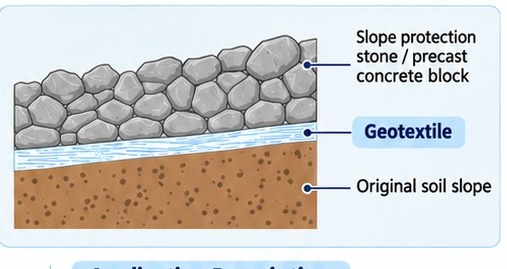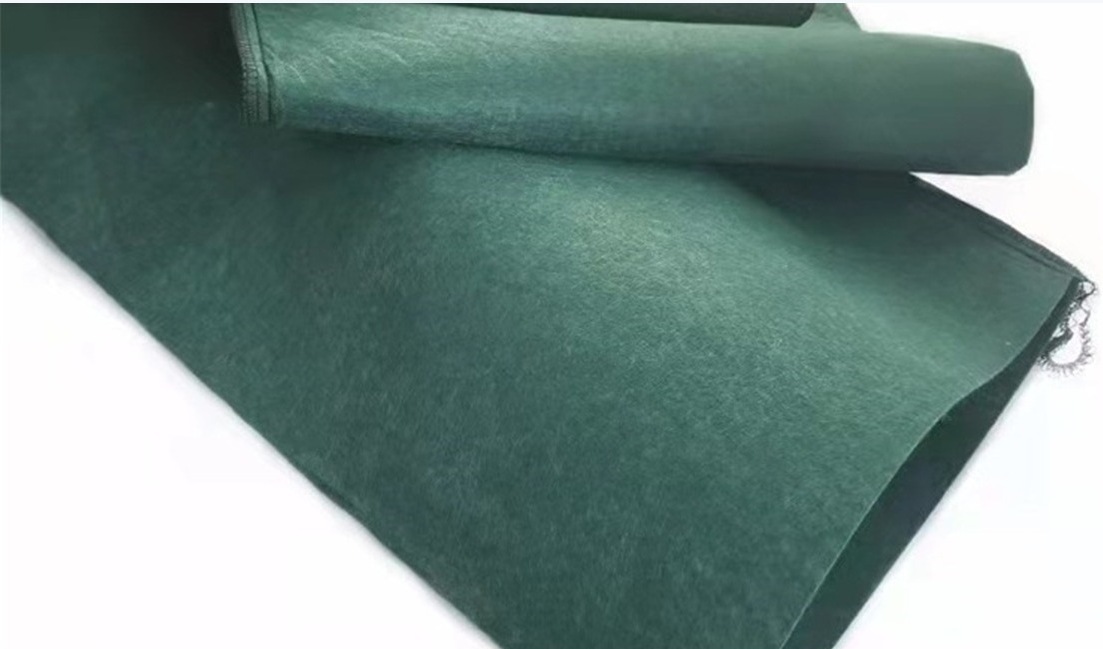
Supplied brochure image. Material / use reference; confirm the offered configuration.
Specification & selection inputs| Construction | PET or PP needle-punched geotextile cut and sewn into a flexible bag |
|---|
| Supply / process | Narrow-side opening with project-confirmed seams and filled-bag installation |
|---|
| Intended uses | Slope surface protection, riverbanks, soil conservation and ecological restoration |
|---|
| Commercial model | Not established in the supplied literature; confirm the offered grade |
|---|
| Data status | Brochure references; not guaranteed values or batch test results |
|---|
Catalogue references are not guaranteed performance values. Confirm the offered grade, test methods and supply responsibilities in the quotation.
Supplier literature: specification inputs
These are stated brochure ranges for preliminary review, not a guaranteed combination or an approved commercial model. Confirm the selected construction, tolerances, test method and acceptance criteria.
| Property / configuration | Literature reference |
|---|
| Regular size | 40 × 80 cm reference |
| Larger size | 50 × 100 cm reference; assess filled weight and handling |
| Fabric mass | 100–250 g/m² selection reference |
| Common options | 150 / 200 / 250 g/m² |
| For larger bags | Source recommends evaluating 150 g/m² or above; not a universal design rule |
Material and construction
PET or PP needle-punched geotextile cut and sewn into a flexible bag.
The material is selected for slope surface protection, riverbanks, soil conservation and ecological restoration. Define the component or system position first, then use the selection and evidence requirements on this page to prepare a comparable enquiry.
Applications and material position
Slope surface protection, riverbanks, soil conservation and ecological restoration.
Choose the filled-bag configuration as part of the intended slope or bank system. Include filling material, drainage, bag arrangement and handling access; a fabric specification alone does not describe the installed bag.
What changes the selection
Use a filled sample to review dimensions, seam closure and handling. Check compatibility between fill grading and the textile, and assess how the proposed arrangement addresses flow, drainage and restraint.
Processing and supply configuration
Narrow-side opening with project-confirmed seams and filled-bag installation.
Agree the supplied format, dimensions, tolerances, identification and packaging around the actual converting or installation sequence. Use a representative sample to confirm the proposed construction before recording it as the accepted material for the order.
Reference dimensions and configuration
The supplied literature provides the following preliminary inputs: Regular size: 40 × 80 cm reference; Larger size: 50 × 100 cm reference; assess filled weight and handling; Fabric mass: 100–250 g/m² selection reference; Common options: 150 / 200 / 250 g/m²; For larger bags: Source recommends evaluating 150 g/m² or above; not a universal design rule.
Confirm the offered construction and applicable range before ordering. These entries are not a promise that every listed value can be supplied together.
Performance review and acceptance
Fabric properties, opening/finished dimensions, seam strength, hydraulic compatibility and outdoor durability. Request the applicable method, specimen direction, conditioning and test scope. A published reference range is different from a measured sample result.
Keep the proposed material identifier, specimen preparation and acceptance basis with the result so that procurement can compare like with like.
Applicability and limitations
A bag is not a stand-alone solution for every slope-stability problem. Steep slopes, scour or structural requirements require a complete design including drainage, restraint and anchorage as needed.
Sampling and procurement brief
Include the following in your enquiry: slope and flow conditions; empty and filled bag dimensions; fill grading; fill quantity; seam closure; handling method; vegetation and restraint plan.
Start with the conditions you know; mark the unknown values for review. Use the related application and product-type links on this page to refine the requirement, then send a material-specific brief. Sample approval, packing, available supply format, quantity and delivery timing are confirmed for the proposed order.
Source & applicability
Supplier literature supports this selection brief. Reference ranges do not establish an approved grade, certification or tested system performance.